Forestry mulching or traditional land clearing: which one does your property need?
For most rural Southern Illinois work, reclaiming pasture, opening hunting ground, cutting trails and fence lines, forestry mulching is the better fit: it costs less, protects the topsoil, and leaves usable ground the same day. Traditional clearing earns its cost in one case, when you are building and need bare, graded, stump-free dirt.
The two methods solve different problems, and plenty of internet pages blur them together. Here is the difference, with the honest limits of each. It is the conversation we have on nearly every forestry mulching estimate we give.
How do the two methods actually work?
Traditional clearing is a sequence. An excavator or dozer pushes the growth out by the roots, a root rake or grapple stacks it, the piles get burned or hauled, and the torn ground gets graded. The result is bare dirt, ready for construction.
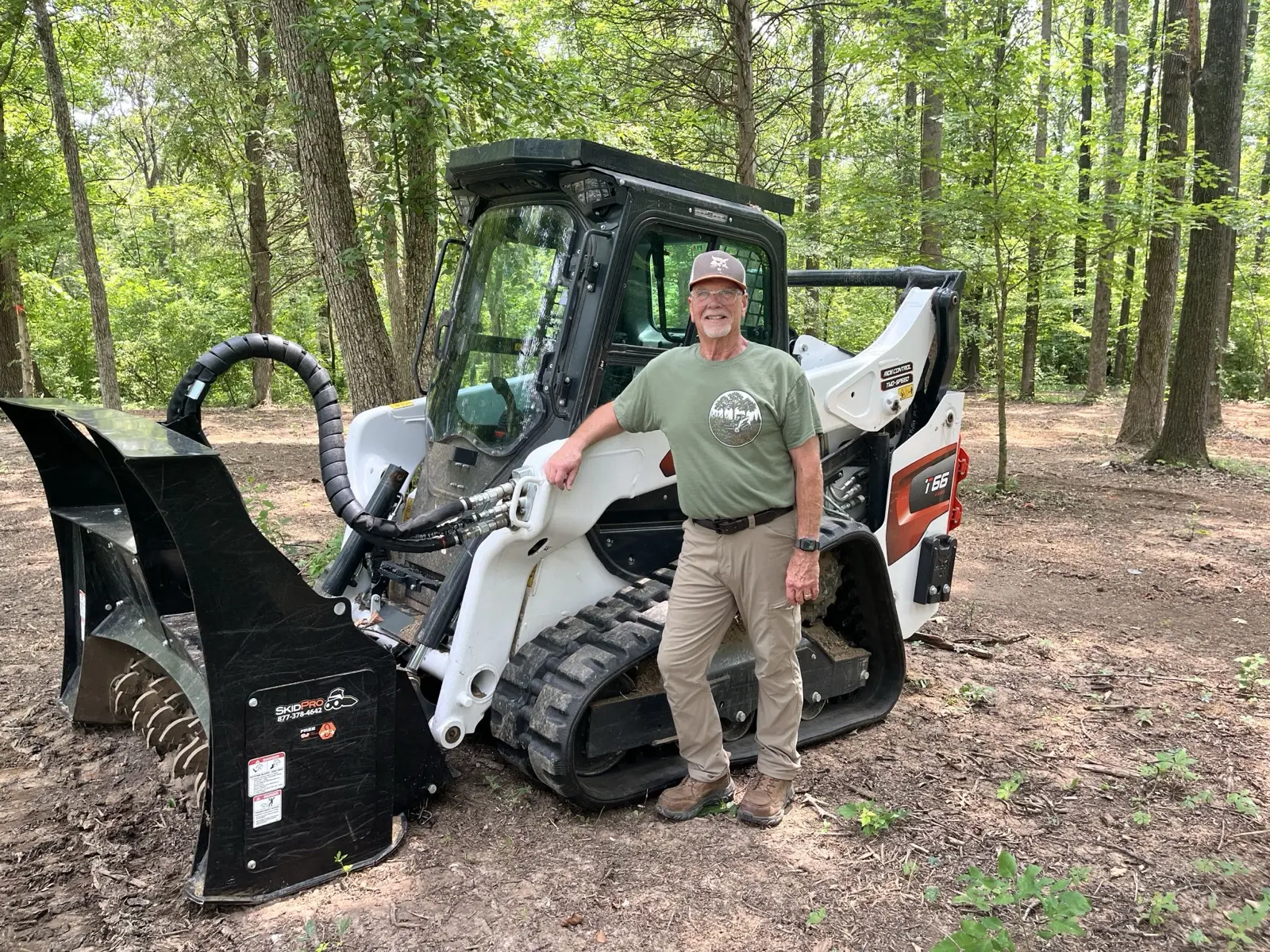
Forestry mulching is one machine and one pass. A tracked skid steer with a mulching head cuts standing brush, saplings and small trees and grinds them into chips on the spot. Stumps get cut down to grade, roots stay in the ground, and the chips stay as ground cover.
| Factor | Forestry mulching | Traditional clearing |
|---|---|---|
| Machines on site | One | Several, plus trucks |
| Debris | Stays as chip cover | Burned or hauled ($500–$2,000+ per acre) |
| Topsoil | Stays in place | Often stripped out with the roots |
| Stumps and roots | Cut to grade, roots remain | Dug out and removed |
| Finished surface | Mulched, usable same day | Bare dirt, needs grading and seed |
| Regrowth | Some, from live roots | Little, from removed stems |
| Ready to build on | No | Yes |
| Published research cost | $850 per acre | $1,650 per acre |
The research cost line comes from a university extension project that ran both methods on comparable ground. It dates back well over a decade, so treat it as a ratio, not a current quote: mulching came in at roughly half.
What does each method do to your soil?
This is the part most people never hear at an estimate. University extension puts it bluntly: bulldozer clearing nearly always destroys the topsoil, because the soil leaves the site wrapped around the root balls. Even an excavator with a root rake reduces the loss without eliminating it.
Soil compaction research tells the same story from below. Ground compacts up to 50 percent in the first three machine passes, the effect reaches a foot down or more, and recovery can take decades. Fewer machines and fewer passes mean less of that, and a mat of chips under the tracks measurably cushions it further.
Mulching leaves the root mat, the soil structure and a chip layer that holds moisture and slows erosion. If the goal is pasture, food plots or simply ground that grows grass again, the topsoil you keep is the whole point. On old fields grown up in brush, that difference decides whether the ground comes back in one season or three.
When does each method win?
Mulching wins on reclaiming and managing land. Old pasture, fence lines, field edges, trails and lanes, invasive thickets, and hunting property where the cover is the asset. Deer forage research makes the hunting case plainly: a closed canopy grows almost nothing at deer level, and opening about 30 percent of it can double the forage. Selective mulching does exactly that without stripping the tract.
Traditional clearing wins on construction. Building pads, foundations, driveways and any ground that needs stumps out and a grade set. A mulcher cannot dig a root ball or shape dirt, and we say so on every estimate where it matters.
The honest hybrid is common. Mulch the acreage, and bring in an excavator for just the build footprint. You pay full clearing cost only where the building goes.
What about regrowth?
Mulching leaves roots alive, so regrowth is real, and anyone who tells you otherwise is selling. Extension research on bush honeysuckle shows cutting alone increases stem count as the plant resprouts. The chip layer slows it, and the practical fix is cheap: a follow-up pass every year or two, or targeted herbicide on cut stumps, which extension guides recommend applying within minutes of the cut. Keeping ground open costs a fraction of taking it back.
The bottom line for Southern Illinois ground
If you are building, hire the excavator. For everything else on rural ground in Jackson, Union and Williamson counties, mulching gets you usable land faster, cheaper and with the soil still on your property. We run the numbers for your specific ground for free: call or text (618) 697-5190. For price detail, see what forestry mulching costs per acre and what land clearing costs in Illinois.